Want to be in the loop?
subscribe to
our notification
Business News
IMPORTERS MUST HEED RULES FOR INVOICES
According to the Joint Circular No. 60/2011/TTLT-BTC-BCT-BCA detailing the modes of invoices and documents for imports circulating in the market, establishments involved in the business of imported goods need to have a firm grasp of certain provisions on ways to identify imports circulating in the market, types of accompanying invoices and documents, and time limits of production of invoices and documents, apart from the handling of violations.
1.What constitutes imports circulating in the market?
Imports circulating in the market include those which are being transported en route, displayed for sale, or preserved at warehouses, ports, storing yards, and manufacturing facilities, apart from business establishments, or other locations.
In addition, it is essential to acknowledge that several types of imports, although currently being transported or placed elsewhere, are not subject to being mentioned in this article of PLF, including but not limited to goods temporarily imported for re-export; goods temporarily exported for re-import; goods imported for investment project implementation; and raw materials and supplies imported for performance of processing contracts with foreign traders; in addition to imports in border-gate transfer; goods transported from port to port; and goods in transit currently under customs inspection and supervision; etc.
2. Types of invoices and documents accompanying imports when circulating in the market
In regards to the goods directly imported by business establishments, when displayed for sale at stores or preserved at warehouses, Ex-warehousing-cum-internal Transportation Bills are required in case of dependent cost-accounting in the same province or city, plus invoices in case of independent cost-accounting. In the event where goods are solely preserved at warehouses, Warehousing Receipts are compulsory.
Concerning the goods not directly imported by establishments, when displayed for sale at stores, transported, or preserved at warehouses, there must be invoices and documents issued by goods sellers.
Where establishments transfer the imports to their branches, shops, and stores, etc. in other provinces or cities, or just between their branches, invoices or Ex-warehousing-cum – internal Transportation Bills and Transfer Orders are required.
For imports purchased from agencies selling confiscated goods or National Reserves Agencies, sale invoices issued by these agencies are mandatory.
In case of imports that are gifts or duty-free presents; or are within allowable duty-free luggage quotas; or are duty-free goods sold at border – gate economic zones; or goods exchanged by border residents within allowable duty-free quotas that are on the List of Goods manufactured by countries sharing the same importing boundaries with Viet Nam; in addition to those which are transported, displayed for sale, or preserved at warehouses outside border-gate economic zones, enterprises shall produce documents to prove that taxes have been declared and paid for such goods.
3. Time limits of production of invoices and documents
It is mandatory for business establishments to produce invoices and documents proving the legality of the following goods upon request of inspection agencies: imports transported en route or preserved at warehouses, storing yards or other places that are not under the ownership of or used by business establishments; and imports which are on the list of those subject to conditional import under relevant laws. In case the establishments have no representative to directly escort such goods, the recipient or vehicle driver must be authorised. If invoices and documents fail to be produced at the time of inspection, inspection agencies shall temporarily seize goods until verification is completed.
Regarding the imports which are currently displayed for sale, preserved at warehouses, ports, or storing yards, and owned or used by establishments, invoices and documents, proof of the legality of the goods must be produced within 72 hours after such goods are examined.
4. Handling of violations related to invoices and documents
Administrative penalties shall be imposed on business establishments whose imports circulate in the market without invoices and documents, or with invoices and documents that are either counterfeit, invalid, expired, or falsely created; or where such establishments fail to produce required invoices and documents within a prescribed time limit. That being said, enterprises are entitled to lodge complaints, denunciations, or file administrative lawsuits against decisions on handling violations. However, during such complaints and denunciations, or while waiting for the Court's decision, enterprises are still required to comply strictly with the decisions of competent authorities.
Source: VIR
Related News

BANKING / FINANCE / INSURANCE / TAX
REMITTANCES TO HCM CITY RISE NEARLY 40% IN Q3
Remittances to HCM City reached more than US$2.83 billion in the third quarter of this year, up 39.5 per cent from the previous quarter and 3.6 per cent year-on-year. This was the first quarter showing positive annual growth this year, helping narrow the decline in remittance inflows over the first nine months. According to the State Bank of Vietnam (SBV)’s Regional Branch 2, remittances transferred to HCM City through credit institutions and economic organisations totalled $2.835 billion in Q3, an increase of more than $802 million from the previous quarter.

TECHNOLOGY
TECH SECTOR GROWTH OPENS UP OPPORTUNITIES FOR VIỆT NAM TO GO GLOBAL
The growth of the electronics, semiconductor and high-tech sectors worldwide is opening up a variety of opportunities for Vietnamese enterprises to integrate more deeply into the global supply chain. However, to become suppliers for these corporations, domestic enterprises must meet rigorous standards regarding quality, technology, productivity and order fulfilment capabilities.
VIETNAM ECONOMY INVESTMENT
FOREIGN INVESTORS SEEKING A SYNCHRONISED MANUFACTURING ECOSYSTEM
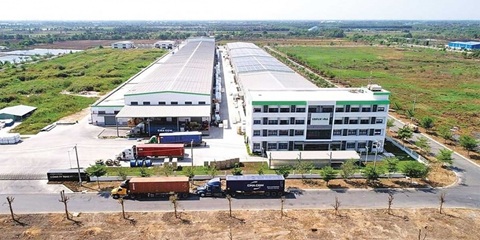
Instead of focusing only on land costs and incentives as usual, foreign investors are seeking a synchronised manufacturing ecosystem, from stable power supply and logistics to shared infrastructure and the convenience of completing residence procedures for experts to serve their long-term investment in the country.
MEMBER CORNER / PROMOTIONS
SENTRYSAFE FHW40200 – PROTECT YOUR VALUABLES, ENJOY PEACE OF MIND!
Looking for a reliable solution to protect your important documents, cash, and valuables from fire and water damage? Genuine SENTRYSAFE - Reliable protection for your valuables and peace of mind! Contact Sen Wai Vietnam for more information and personalized product recommendations.
PROPERTY / INDUSTRIAL ZONE
HCM CITY ATTRACTS US$5.7 BILLION INTO EXPORT PROCESSING AND INDUSTRIAL ZONES
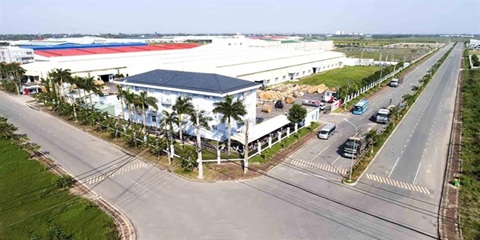
HCM City attracted US$5.7 billion in domestic and foreign investment into its export processing and industrial zones during the first nine months of 2026. The figure exceeded the city's full-year target by 31 per cent, highlighting strong momentum in high-quality industrial investment under Resolution No.10-NQ/TW. Total investment reached 131 per cent of the 2026 target of $4.25 billion and represented a 29 per cent increase compared with the same period in 2025, according to the city's Export Processing and Industrial Zones Authority (HEPZA).
INFRASTRUCTURE / CONSTRUCTION / LOGISTIC / PORT
DONG THAP PROVINCE STEPS UP INDUSTRIAL EXPANSION AND INFRASTRUCTURE CONNECTIVITY
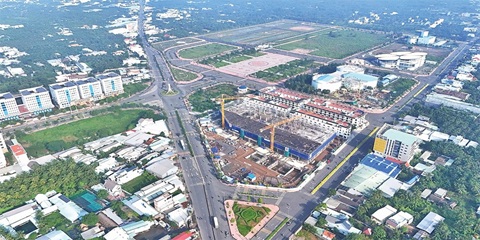
Accelerating public investment, strengthening inter-regional connectivity, and expanding industrial land are helping Dong Thap efficiently bolster competitiveness and drive economic growth. Following the 2025 merger of the former Dong Thap and Tien Giang provinces, the expanded Dong Thap province in the Mekong Delta faces mounting pressure to accelerate infrastructure development and strengthen connectivity among local economic zones, urban areas, industrial parks (IPs), and production centres.
Events Sponsors






















